


Home Appliance Maintenance Tips | Same-Day Repair in NC & SC
Quick answer: Most appliance breakdowns start with something small that was never cleaned: dusty fridge coils, a clogged dishwasher filter, a dryer vent full of lint or a washer drain filter packed with debris. Ten minutes a month and a few yearly tasks prevent most of the repairs we see. Use the checklist below, and don't ignore early warning signs like new noises, error codes or water on the floor.
A lot of the repair calls I go on could have been avoided. Not because the owner did anything wrong, but because nobody told them a filter existed, or that fridge coils need cleaning at all.
I repair appliances in homes across Charlotte, Waxhaw, Matthews, Monroe and the surrounding towns. This is the checklist I'd give a friend: what to do, how often, and why it matters. None of it needs special tools.
Appliance Maintenance Checklist at a Glance
Appliance | Task | How often |
|---|---|---|
Refrigerator | Clean condenser coils | Every 6–12 months (every 6 with pets) |
Refrigerator | Clean door gaskets, check the seal | Every 3 months |
Refrigerator | Check temperature: fridge 37–40°F, freezer 0°F | Monthly |
Refrigerator | Change water filter (if equipped) | Per manual, often every 6 months |
Washer | Clean drain pump filter (front-load) | Monthly |
Washer | Run Tub Clean / cleaning cycle | Monthly |
Washer | Wipe door gasket, leave door open to dry | After washing |
Dryer | Clean lint screen | Every load |
Dryer | Clean the vent duct to the outside | Yearly, or sooner if drying slows |
Dishwasher | Rinse the filter | Monthly |
Dishwasher | Check spray arms for clogged holes | Every 3 months |
Oven / cooktop | Wipe spills, clean burner caps | After spills |
Oven | Check the door seal | Every 6 months |
All appliances | Professional check-up | Yearly for older units |
Refrigerator Maintenance
The fridge runs 24 hours a day, so small problems add up fastest here.
Clean the condenser coils. They release the heat your fridge pulls out of the food. Dusty coils make the compressor work harder and longer. Unplug the fridge, remove the bottom grille or pull it out, and use a coil brush and vacuum. This is the single most-skipped task I see, and one of the most common reasons for a fridge that stops cooling.
Check the door seals. Close the door on a dollar bill. If it slides out easily, warm air is getting in. Clean the gasket with warm soapy water before deciding it needs replacing.
Keep the right temperature. The fridge should stay at 40°F or below and the freezer at 0°F (FoodSafety.gov). Most people set it around 37°F.
Don't block the vents. Leave space around the air vents inside so cold air can circulate.
Clear the defrost drain if you see water pooling under the crisper drawers.
If your fridge is already warm, see why is my fridge not cooling.
Washer Maintenance
Clean the drain pump filter on front-loaders once a month. It sits behind a small door at the bottom front and catches coins, hair ties and socks. A clogged filter is the number one cause of drain error codes.
Run the cleaning cycle (Tub Clean or similar) monthly to prevent odor and buildup.
Use HE detergent, and less of it. Too much soap leaves residue and causes drain problems.
Don't overload. Overloading wears out bearings and suspension parts.
Leave the door open after washing so the gasket can dry and doesn't grow mold.
If your washer already shows a drain code, see LG washer not draining.
Dryer Maintenance
This is the one maintenance task that's about safety, not just repair costs.
Clean the lint screen after every load.
Clean the vent duct that runs to the outside at least once a year. According to the U.S. Fire Administration, failure to clean was the leading factor in home clothes dryer fires, at 34% of cases, and dryer fires peak in fall and winter (USFA report via Fire Engineering).
Watch for warning signs: clothes taking longer to dry, the dryer feeling very hot, or a burning smell.
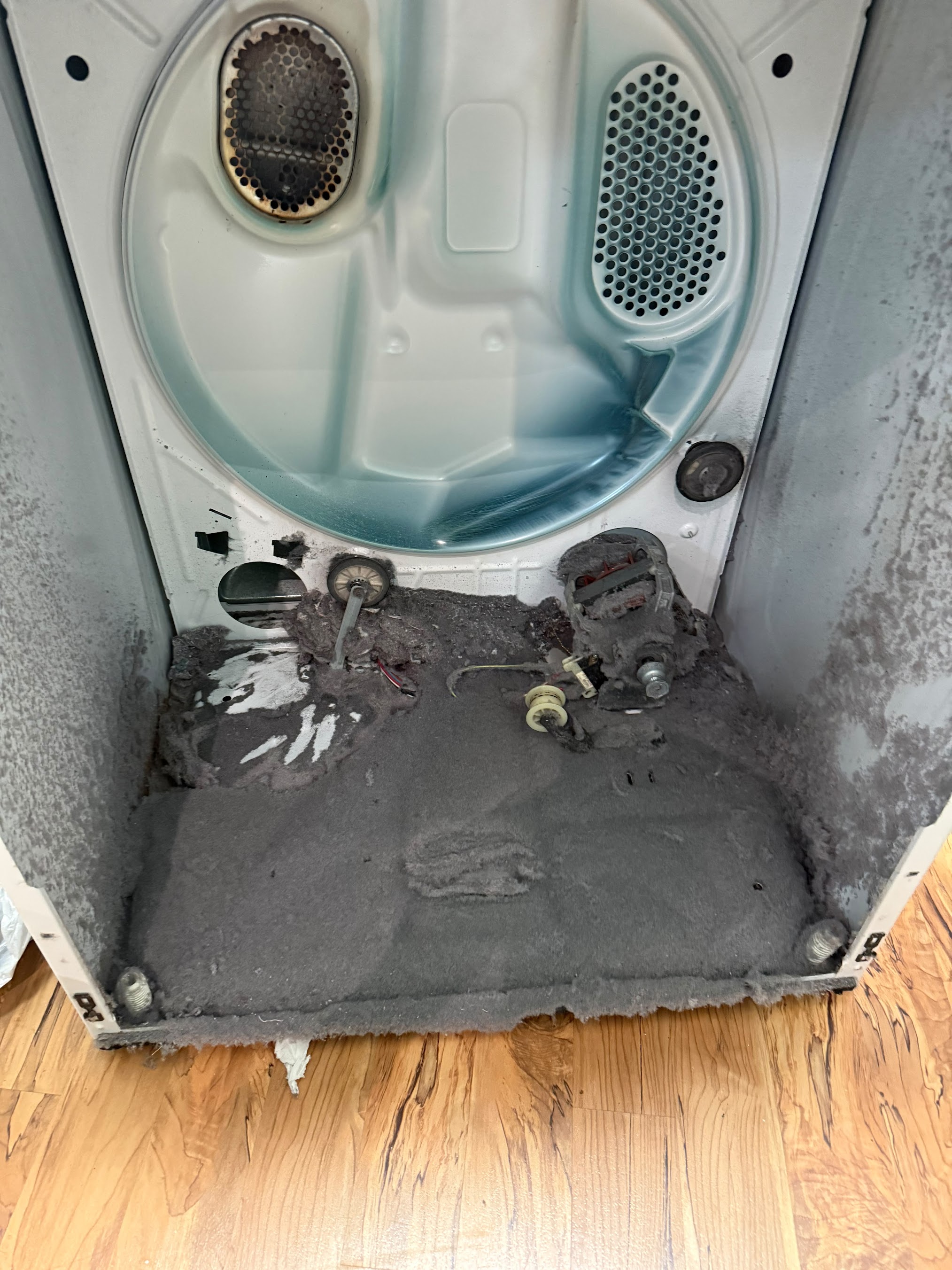
On service calls we regularly open dryers with lint packed around the motor and drum rollers. Often the only thing the owner had noticed was that clothes were taking longer to dry. More on this in our dryer vent cleaning guide.
Dishwasher Maintenance
Rinse the filter monthly. Most modern dishwashers have a removable filter at the bottom of the tub. A clogged filter causes dirty dishes, odors and drain problems.
Check the spray arms for blocked holes and clear them with a toothpick.
Scrape plates before loading; large food scraps clog the filter fast.
Run a cleaning cycle with a dishwasher cleaner once a month if you notice film or odor.
More in our guide to common dishwasher problems.
Oven and Cooktop Maintenance
Wipe spills once the oven cools, before they bake on.
Use self-clean sparingly. The cycle runs extremely hot, which is hard on door locks, fuses and control boards. Light, frequent cleaning is easier on the oven.
Don't use oven cleaner on self-cleaning models unless your manual allows it.
Check the door seal every six months; heat escaping means uneven cooking and wasted energy.
Keep burner caps and igniters clean on gas cooktops so they light reliably.
Seasonal Appliance Care in the Carolinas
Our climate puts different loads on appliances through the year:
Summer: hot, humid weather makes refrigerators run longer, especially a second fridge in the garage. Clean the coils before summer starts, and check that door seals close tightly so humid air stays out.
Fall and winter: more laundry, heavier loads and more dryer use mean more lint. This is the best time to clean the dryer vent, since dryer fires peak in the colder months.
Holidays: ovens, cooktops and dishwashers work hardest from Thanksgiving through New Year's. Test the oven and clean the dishwasher filter before the big meals, not the morning of.
Warning Signs You Shouldn't Ignore
Maintenance prevents a lot, but it can't fix a part that's already failing. Call a technician if you notice:
new grinding, squealing or banging noises;
error codes that come back after a reset;
water on the floor around any appliance;
a burning smell, or an appliance that trips the breaker;
a fridge above 40°F, a dryer that takes two cycles, or a dishwasher that leaves standing water.
Catching these early is usually the difference between a small repair and replacing the appliance.
Frequently Asked Questions
How often should I do appliance maintenance?
Most tasks are monthly and take under 10 minutes: the washer drain filter, dishwasher filter and a fridge temperature check. Fridge coils and the dryer vent need cleaning once or twice a year. The dryer lint screen should be cleaned after every load.
What is the most important appliance maintenance task?
Cleaning the dryer vent, because it's a fire-safety issue. For preventing repairs, cleaning the refrigerator's condenser coils is the most-skipped task and one of the most common reasons a fridge stops cooling.
Can regular maintenance really prevent repairs?
Yes, for many of them. Clogged filters, dusty coils and lint buildup cause a large share of the problems we see. Maintenance can't stop parts from wearing out with age, but it reduces the strain that makes them fail early.
Does doing my own maintenance void the warranty?
Routine cleaning described in your owner's manual doesn't void a warranty. Opening sealed parts or making internal repairs yourself can, so check the warranty terms before doing anything beyond basic cleaning.
Why is my dryer taking longer to dry clothes?
The most common cause is a clogged lint screen or vent duct. Clean both. If drying is still slow, the heating element, thermal fuse or another part may have failed.
Should I get a yearly professional check-up?
For appliances older than about 5 to 7 years, a yearly check-up can catch worn parts before they fail. Newer appliances usually only need the routine cleaning in this checklist.
The Bottom Line
Ten minutes a month on filters and a few yearly tasks on coils and vents prevent most of the repairs we see. Keep this checklist handy, and call a technician when warning signs show up. In Waxhaw, Charlotte and nearby towns, FM Appliances offers appliance repair in Waxhaw, NC and across the Carolinas.
About the author
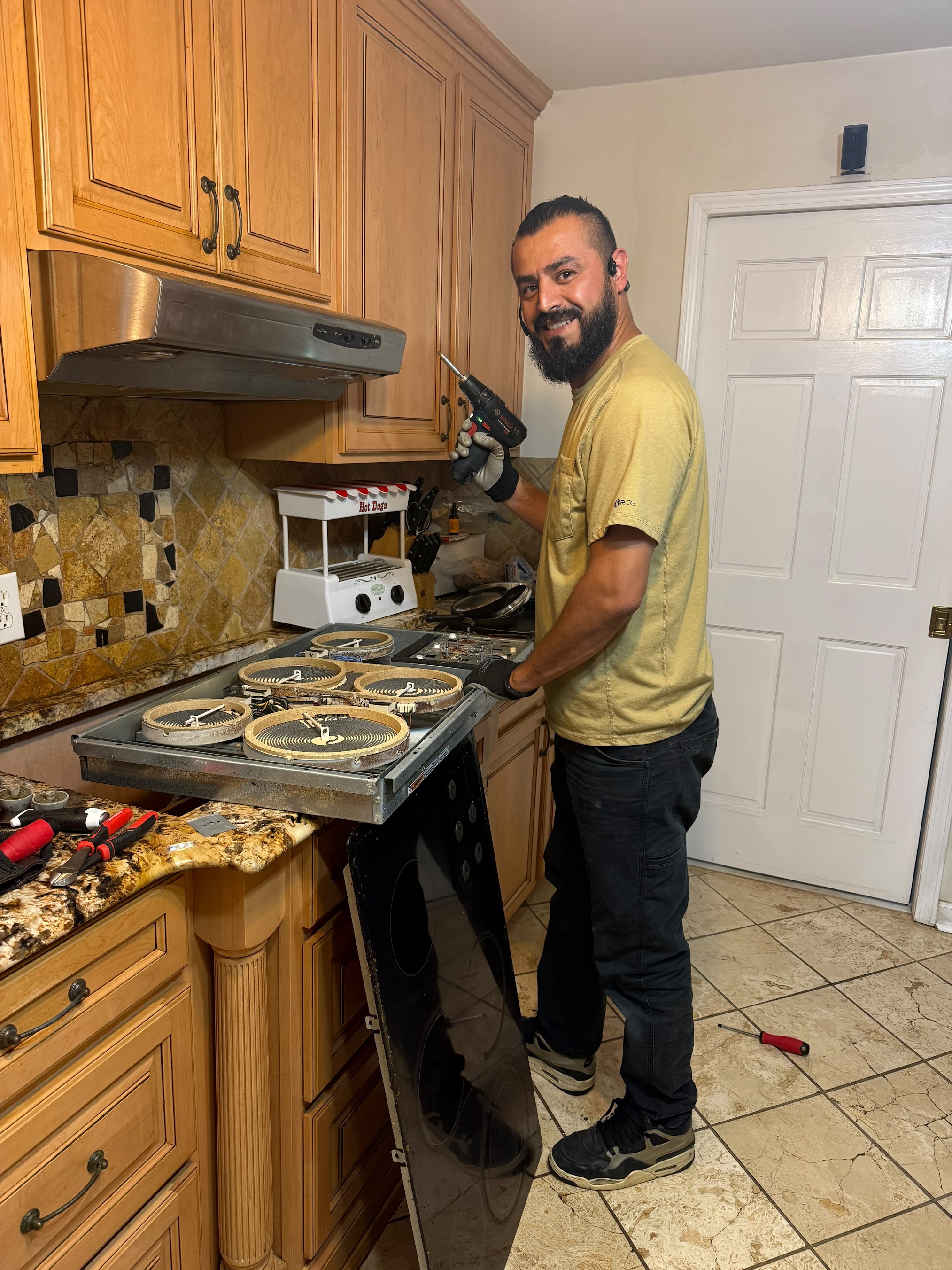
Frank Thompson is an appliance repair technician at FM Appliances, serving Charlotte, Waxhaw and the surrounding towns in North and South Carolina. He works on refrigerators, washers, dryers, dishwashers and ovens from Samsung, LG, Whirlpool, GE and other major brands. His guides are written from what he sees on real service calls, so homeowners can prevent the simple problems themselves and know when a repair needs a pro.

