




Dishwasher Not Draining? Causes & Quick Fixes
Open the door after a cycle and there's a pool of gray water sitting in the bottom of the tub. It's one of the most common complaints we hear from Charlotte homeowners, and it's rarely the disaster it looks like. More often than not, a dishwasher that won't drain has a clog you can clear at the sink in under half an hour no parts, no service call. The goal of this guide is to help you tell the quick fixes apart from the real repairs, so you don't pay for a technician you didn't need, or waste a Saturday on a job that was never DIY to begin with.
Key Takeaways
A little clean water sitting in the filter well after a cycle is normal. A tub full of dirty standing water is not.
The number one cause is a clogged filter or drain hose — both are DIY-friendly and cost nothing to fix.
Newly installed garbage disposal? The most-missed cause of all is a knockout plug left in place. Check it first.
Bail out the standing water before you start, and cut power at the breaker before you reach anywhere near the pump.
Call a pro when the drain pump is dead, the check valve has failed, or the control board isn't sending the drain signal.
Quick Answer
A dishwasher usually won't drain because the filter is clogged, the drain hose is kinked or blocked, the garbage disposal knockout plug was never removed, or the drain pump has failed. Start by clearing the filter at the bottom of the tub, then check the drain hose under the sink for clogs and kinks. If the pump hums but no water moves, it's likely jammed or worn out and may need replacing.
First, know what "normal" looks like
Before you diagnose anything, it helps to know what isn't a problem. A small amount of clean, clear water sitting in the filter recess at the bottom of the tub is by design — it keeps the seals from drying out between cycles. What you're worried about is different: several inches of cloudy, food-flecked water that didn't drain at the end of the wash. If you're seeing the second one, keep reading.
It also helps to understand the path the water takes. When the drain portion of the cycle starts, the drain pump pushes water out of the sump at the bottom of the tub, up through a hose, and into either your garbage disposal or a dedicated drain port under the sink. A blockage or failure anywhere along that path leaves water behind. So the smartest way to troubleshoot is to follow that path in order, starting with the parts that are easiest to reach.
Work through the causes in this order
Here are the usual culprits, arranged roughly from most to least common — and, conveniently, also from easiest to hardest to fix.
The filter is clogged
Nearly every modern dishwasher has a removable filter assembly at the bottom of the tub, usually a cylinder you twist a quarter-turn and lift out. Over months of use it collects broken glass, labels soaked off jars, seeds, coffee grounds, and a layer of grease sludge that smells about as good as it sounds. When that mesh chokes up, water can't get down to the pump fast enough to drain, and you're left with a puddle.
Pull the filter, rinse it under hot running water, and scrub the mesh with an old toothbrush until the light shows through it again. If you've owned the machine for a year or two and never cleaned this part — and most people haven't — there's a real chance this single step ends your whole investigation. While the filter is out, shine a flashlight into the sump underneath and fish out any debris sitting on top of the pump.
The drain hose is kinked or blocked
The drain hose runs from the pump, up under your sink, and over to the disposal or drain port. Two things go wrong here. First, it kinks — especially where it loops behind the cabinet or gets pinched by something shoved under the sink. Second, food paste and grease slowly build a rind inside it that narrows the opening until drainage crawls to a stop.
Disconnect the hose end under the sink, aim it into a bucket, and see what comes out. If it's a trickle when it should gush, you've found a clog. A long pipe cleaner, a straightened coat hanger used gently, or a blast of water from the other end usually clears it. Check the whole run for kinks while you're back there, and make sure nothing heavy is resting on the hose.
The garbage disposal knockout plug — the classic gotcha
This is the one that catches people out, and it's worth checking early if the timing fits. When a dishwasher drains into a garbage disposal, the disposal comes from the factory with a solid knockout plug sealing the dishwasher inlet. Whoever installs the disposal is supposed to punch that plug out. If you (or a plumber, or the previous homeowner) recently swapped in a new disposal and that step got skipped, your dishwasher is draining into a sealed dead end.
Look inside the disposal's dishwasher inlet — the small nipple near the top where the drain hose connects. If you can see or feel an intact plastic disc in there, that's your entire problem, and it's a five-minute fix with a screwdriver and a hammer tap. This is the single most satisfying "repair" we get called out for, because there's nothing actually wrong with the dishwasher at all.
The air gap is clogged
If you have a small chrome cylinder poking up from the countertop next to the faucet, that's an air gap — a code requirement in some areas that keeps dirty drain water from siphoning back into the machine. It can clog with the same debris that fouls everything else. Twist off the cap, lift out the cover, and clean any gunk from inside. A backed-up air gap can bubble water onto the counter during the drain cycle or block drainage entirely.
A jammed or failed drain pump
The drain pump is the muscle that moves water out. Its impeller can seize when a shard of glass, a fruit pit, or a chip of bone lodges in the blades, and the motor itself can simply wear out after years of service. Here's how to read it: if you hear a hum or buzz during the drain phase but no water leaves the tub, the pump is getting power but can't turn — usually a jam. If you hear nothing at all where the drain sound should be, either the motor has failed or the control board isn't telling it to run.
Clearing a jam is sometimes doable if you can safely reach the impeller, but replacing a failed pump means pulling the dishwasher out and getting into the sump — the point where most people are better off calling in help.
A stuck check valve
Many machines have a small check valve that stops drained water from flowing back into the tub. When it sticks open, you get a partial drain or water that mysteriously returns after the cycle finishes. It's not a huge part, but reaching it means getting into the sump area, so it lands on the pro side of the line for most homeowners.
Brand quirks worth knowing
A few patterns show up again and again in Charlotte kitchens. Bosch dishwashers flag restricted drainage with E24 or E25 error codes, and because they run so quietly, a weak drain often goes unnoticed until water is standing — their filters reward regular cleaning. Whirlpool and KitchenAid share a lot of parts and generally have easy-access filters, which makes them friendly to DIY. Samsung units announce drain trouble with codes like LC or OC. GE and Frigidaire fill out most of the rest of what we service. Across every one of these brands, the diagnostic logic is identical: follow the water from the tub outward.
Do this before you call anyone
Run these checks in order. Most people find the culprit before they reach step four, and you'll want the dishwasher repair specialists on our team only if the water's still standing at the end.
Bail and towel out the standing water so you can actually work — a plastic cup and a sponge handle it in a few minutes.
Clean the filter at the bottom of the tub. Rinse and scrub it, and clear the sump underneath.
Check the drain hose under the sink for kinks and internal clogs; clear anything you find and confirm nothing is pinching it.
Confirm the disposal knockout plug was removed if you drain into a disposal — critical if the disposal is new.
Clean the air gap on the counter if your setup has one.
Run a short cycle and listen closely during the drain phase — a hum with no drainage points to a jammed pump; silence points to a pump or board fault.
⚠️ Safety first: cut power to the dishwasher at the breaker before you reach near the pump or sump. You've got standing water and live wiring inches apart, so this isn't the step to skip. Wear a glove when clearing the filter or sump — broken glass hides in there more often than you'd think.
Cause, fix, and how long it takes
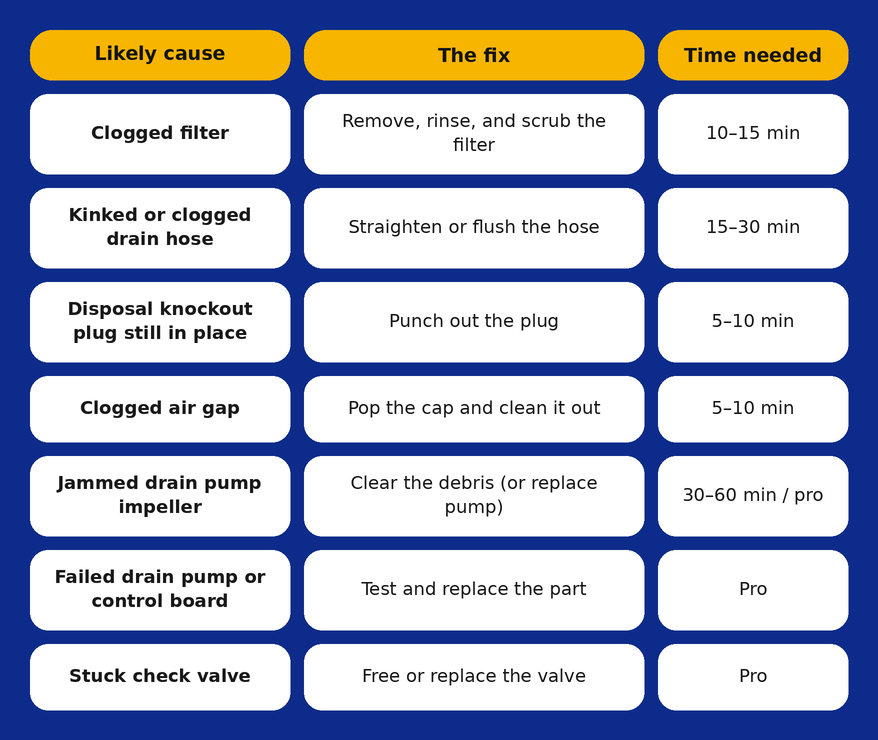
When it's time for a pro
If you've cleared the filter, hose, plug, and air gap and you're still staring at standing water, the problem has moved past the DIY zone. A drain pump that hums but won't move water, a pump that's silent when it should run, a check valve stuck open, or a control board that never sends the drain command all call for a technician with a meter and the right replacement part. These repairs involve electrical testing and, for the pump, pulling the unit out to reach the sump — the kind of thing worth doing correctly the first time rather than buying parts on a guess. If you've been chasing recurring error codes rather than a one-time clog, our rundown of common dishwasher problems is a good next read before you book.
Keep it draining freely
Prevention here is genuinely easy and pays off. Scrape plates before loading — you don't need to pre-rinse, and modern detergents actually work better with a little food residue to grab onto, but big scraps overwhelm the filter fast. Clean the filter about once a month; set a reminder if you're the forgetful type. Run a hot cycle with a dishwasher cleaner or a cup of plain white vinegar monthly to cut grease and, just as importantly, to fight the scale that Charlotte's hard water leaves behind — that mineral film narrows hoses and coats the filter mesh faster here than in soft-water regions. Finally, run the hot tap at your sink for a few seconds before starting a cycle so the machine fills with genuinely hot water from the first fill, which dissolves grease instead of letting it congeal in the drain path. A little of this routine, folded into your regular home appliance maintenance, keeps standing water from ever showing up.
Frequently asked questions
Why is there standing water in the bottom of my dishwasher?
Standing dirty water almost always means a drainage blockage. The most common spots are the filter at the bottom of the tub and the drain hose under the sink. If you recently had a new garbage disposal installed, check that the knockout plug was removed — that's a frequent and easy-to-miss cause of a full tub.
Can I run my dishwasher if it's not draining?
It's best not to. Running it again just adds more water to a tub that can't empty, and if the pump is jammed, you risk overheating the motor. Bail out the water, clear the filter and hose first, then run a test cycle. If it still won't drain, stop and diagnose rather than repeating cycles.
Is a dishwasher not draining an easy fix?
Often, yes. A clogged filter, kinked hose, or disposal knockout plug are all things a homeowner can handle in under 30 minutes with no special tools. It only becomes a pro job when the drain pump, check valve, or control board is involved, since those require electrical testing and disassembly.
How much does dishwasher repair in Charlotte usually cost?
It depends on the cause. Clearing a clog yourself costs nothing. If the drain pump has failed, professional dishwasher repair in Charlotte typically runs a service-call fee plus parts and labor. We give you the diagnosis and a clear price before any work starts, so there are no surprises.
Does hard water affect my dishwasher's drainage?
Yes. Charlotte's hard water leaves mineral scale and soap film that gradually narrow the filter mesh and hose interior, so drainage slows over time. A monthly hot cycle with a dishwasher cleaner or white vinegar keeps buildup down and helps the machine drain the way it should.

