


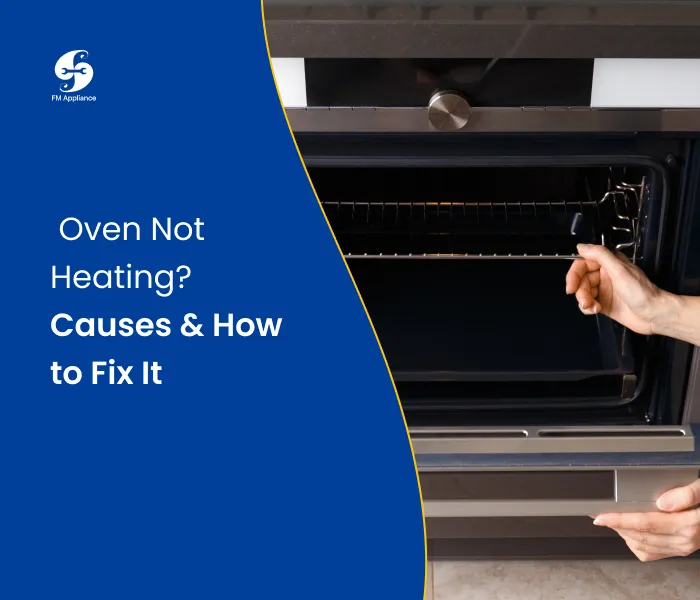
Oven Not Heating? Causes & How to Fix It
There's a particular kind of dinnertime panic that comes from a preheat that never beeps. Maybe the oven is stone cold, maybe it heats but won't hold temperature, maybe bake works but broil doesn't. Each of those points to a different failed part, and the trick to a fast fix is reading the pattern correctly before you touch anything. This guide walks Charlotte homeowners through exactly that what your specific symptom is telling you, and whether it's a part you can spot or a job for a technician.
Schedule a diagnostic visit or call (978) 923-9666 , Our Technician Frank can usually get to you within 24–48 hours across the Charlotte metro.
Key Takeaways
The pattern of the failure is the biggest clue: no heat, weak heat, or bake-vs-broil all point to different parts.
On electric ovens, a visibly damaged bake element (blistered or broken) is the most common and most DIY-friendly fix.
On gas ovens, a weak or dead igniter is the usual culprit and it fails in a telling way.
A wrong or drifting temperature sensor causes "heats but wrong temperature" complaints.
Cut power at the breaker before touching an electric element, and shut off the gas before any gas-oven work.
Quick Answer
An oven that won't heat usually has a failed bake element (electric) or a weak igniter (gas). If it heats but the temperature is off, the oven temperature sensor or thermostat is likely to blame. If only bake or only broil works, the other element or its wiring has failed. Match your exact symptom to the part before replacing anything and see typical repair costs for each below.
Let the symptom tell you the part
Most oven heating problems sort neatly into a few patterns. Find yours below, and you're already halfway to the answer.
Completely cold no heat at all. If the oven does nothing when you call for heat, you're looking at the primary heating source or its power supply. On an electric oven, that's the bake element or the control that switches it on. On a gas oven, it's the igniter or the gas supply. A totally dead oven no display, no lights — points to power, a blown internal fuse, or the control board instead.
Heats, but never reaches temperature. An oven that warms up but stalls short of the set temperature, or swings wildly, usually has a failing temperature sensor or a worn thermostat. The oven is trying, but it's getting a bad reading of how hot it actually is.
Bake works but broil doesn't (or vice versa). Most electric ovens have two elements bake at the bottom, broil at the top. When one dies, the other keeps working. Run each mode and watch which element glows to confirm which one failed.
Uneven cooking or slow preheat. A partially failing element, a weak igniter that's slow to light, or a stalled convection fan can all cause this. It's a subtler symptom, but a real one.
The usual culprits, by oven type
Electric: a failed bake element. The bake element is the coiled metal loop across the bottom of the oven, and it often shows its own failure a blister, a bright burn spot, a break in the loop, or a section that stays dark while the rest glows. A healthy element glows evenly orange within a minute of turning on bake. On many ovens it's a straightforward replacement held by two screws and two wires.
Electric: a failed broil element. Same idea, top of the oven. If broil produces no heat while bake works, the broil element or its connection has failed, and it's diagnosed and replaced the same way.
Gas: a weak or failed igniter. The igniter does two jobs it glows hot to light the gas, and it draws enough current to open the safety gas valve. As it ages and weakens, it may still glow but no longer pull enough current to open that valve. So you get the classic failure: the igniter glows, but the gas never lights and no heat comes. It's a common wear part, but replacing it means working around the gas burner — a job for a pro.
The oven temperature sensor. A thin probe inside the cavity tells the control how hot it is. When it drifts or fails, the oven misreads its own temperature and heats to the wrong level. It's testable against a known resistance range, and if your complaint is "heats but the temperature is wrong," this is suspect number one.
The thermostat or control board. Older ovens use a mechanical thermostat; newer ones use an electronic control board. Either can fail and cut or mismanage the heat. Board-level diagnosis takes the right tools and experience, so it sits firmly on the professional side.
⚠️ Safety first: Switch the oven off at the breaker before touching an electric element those terminals carry 240 volts. For gas ovens, shut off the gas supply before any burner work, and if you ever smell gas, leave it, ventilate, and call your gas utility. When the fix involves the gas valve or control board, that's a call for a technician.
What you can safely check
Confirm power and settings. Rule out a tripped breaker, an active timer or delay-bake, or an accidental Sabbath/lock mode.
Run bake and broil separately and watch which element glows. A dark element is a failed element.
Look for visible element damage blisters, breaks, or burn spots.
Watch a gas igniter through the bottom (flame spreader out, gas ready): a glow with no flame means a weak igniter.
Check with an oven thermometer if temperatures seem off that confirms a sensor or thermostat issue.
Stop and call a pro for element replacement, igniter, sensor, gas valve, or control board work.
What it typically costs to fix
Repair costs vary by part and by how hard the oven is to access, but these are the typical all-in ranges (parts plus labor) we see across Charlotte:
Symptom | Likely part | DIY difficulty | Typical repair cost |
|---|---|---|---|
Electric oven won't heat | Bake element | Homeowner-diagnosable, pro install | $150–$300 |
Broil doesn't work | Broil element | Homeowner-diagnosable, pro install | $150–$300 |
Gas oven won't heat | Igniter | Pro only (gas) | $200–$350 |
Wrong or drifting temperature | Sensor or thermostat | Pro diagnosis | $150–$350 |
No display / totally dead | Control board or wiring | Pro only | $250–$500+ |
For a full breakdown of what drives the price up or down built-in vs. freestanding, gas vs. electric see our oven repair cost guide for Charlotte.
When to bring in a technician
Spotting a broken bake element or confirming which mode fails is well within DIY range. Beyond that, the calculus shifts. Gas igniters and valves involve fuel safety; temperature sensors and thermostats need testing against spec; control boards need proper diagnosis so you're not replacing an expensive part on a hunch. Our oven repair team in Charlotte handles all of these and carries common elements, igniters, and sensors, so a lot of repairs wrap up in one visit. If your range's cooktop burners are acting up alongside the oven, that's usually a separate circuit worth reading in our stove burner not working guide.
Is it worth repairing?
For most ovens, yes — a single element, igniter, or sensor is a modest repair against the cost of a new range, and the rest of the appliance is usually fine. The math only tips toward replacement when an older oven starts stacking failures or when a major part like the control board goes on a unit that's already near the end of its life. If you're on the fence, our repair-or-replace guide lays out how to think it through.
Keeping your oven healthy
Avoid running self-clean right before a big cooking day its extreme heat is exactly when marginal elements and thermostats tend to finally give out. Don't line the oven floor with foil, which traps heat and can damage elements and sensors. Check the door gasket now and then; a crushed or torn seal lets heat escape and forces the oven to work harder. Folding an oven check into your regular home appliance maintenance routine catches small issues before they strand you mid-recipe.
Schedule a diagnostic visit or call (978) 923-9666.
Frequently asked questions
Why is my electric oven not heating up?
The most common cause is a failed bake element. Look inside at the coiled element across the bottom while it's on bake if it doesn't glow evenly orange, or you see a blister or break, it's failed. If both elements are fine but the oven still won't heat, check the temperature sensor, thermostat, or control board next.
Why does my gas oven igniter glow but not light?
A weak igniter is almost always the reason. As it ages, it can still glow but no longer draws enough current to open the safety gas valve, so gas never releases and the oven stays cold. Replacing the igniter a job best left to a pro restores heat.
Why does my oven heat to the wrong temperature?
That usually points to the oven temperature sensor or thermostat giving a bad reading. Confirm it with a separate oven thermometer, then have the sensor tested and replaced.
Should I repair or replace my oven?
Repair usually wins. A bake element, igniter, or sensor costs a fraction of a new range. Replacement makes more sense only for older ovens with multiple failures or a failed control board. For oven repair in Charlotte, we'll give you an honest diagnosis so you can decide with real numbers.
Is a broken oven element dangerous?
A failed element usually just stops heating, but a badly blistered or arcing element can spark. If you see sparking, an actual flame, or smell burning, shut the oven off at the breaker and don't use it until it's inspected.

