


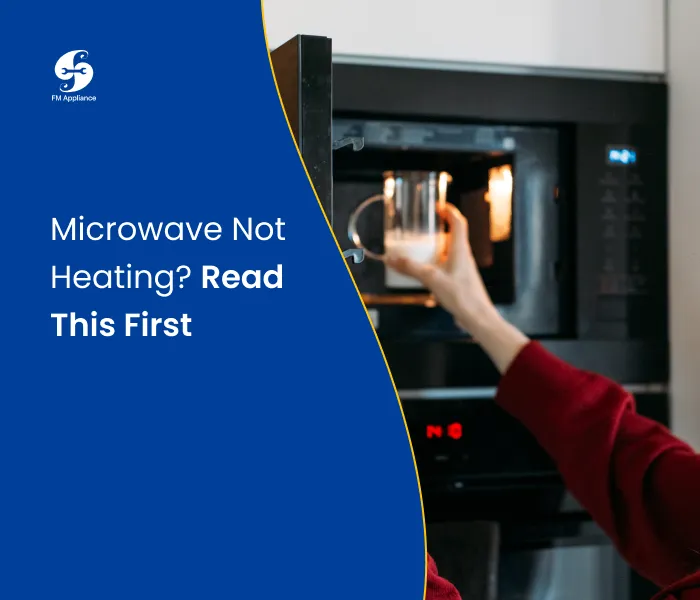
Microwave Not Heating? Why This Is the One Repair to Leave to a Pro
Most of the appliance problems we write about invite you to grab a screwdriver and dig in. This one comes with a genuine warning attached, so we're putting it up top: a microwave not heating one that runs, lights, and spins but leaves food cold is one of the few repairs we tell Charlotte homeowners not to open up themselves. The reason is a component called the high-voltage capacitor, and it deserves the respect. You can safely check a few external things, and you should, but the internal repair belongs to a technician.
Schedule a diagnostic visit or call (978) 923-9666 , Our Technician Frank can usually get to you within 24–48 hours across the Charlotte metro.
Key Takeaways
A microwave not heating is almost always an internal high-voltage failure safe to diagnose from the outside, never safe to open up.
A microwave that lights up, spins, and hums but leaves food cold has a high-voltage fault inside.
The high-voltage capacitor can hold a lethal charge even unplugged. This is not a DIY repair.
You can safely check the outlet, door latch, settings, and power level.
The usual internal cause is a failed magnetron, diode, or capacitor all pro-only.
If it sparks, smokes, or smells burnt, stop using it immediately and unplug it.
Quick Answer
A microwave not heating almost always has a failed high-voltage component most often the magnetron, the high-voltage diode, or the capacitor. These are internal, high-voltage parts that are dangerous to service, so the safe steps at home are limited to checking the outlet, door latch, and settings. The repair itself should be done by a professional.
Why we lead with safety on this one
Inside every microwave is a high-voltage circuit that steps ordinary house current up to thousands of volts to power the magnetron the tube that actually produces the microwaves that heat your food. Part of that circuit is a capacitor, whose entire job is to store electrical charge. Here's the problem: that capacitor can hold a dangerous, potentially lethal charge for a long time after the microwave is unplugged. There's no light, no warning, no way to tell by looking.
This is why microwave heating repair is different from almost everything else in the kitchen. Even experienced DIYers who happily rebuild a dryer or a dishwasher shouldn't open a microwave's cabinet unless they're trained to discharge that capacitor safely. The parts themselves aren't wildly expensive the risk of getting to them is what's real. So the smart play is to rule out the easy external stuff yourself, and hand the rest to someone with the training and tools.
What you CAN safely check
None of these require opening the microwave. Do all of them before calling anyone.
Is it actually getting proper power? Test the outlet with another device, or plug the microwave into a known-good outlet. Microwaves draw a lot of current, and a marginal outlet or tripped GFCI can cause odd behavior.
Is the door latching completely? Microwaves will not heat unless the door is fully closed and the interlock switches confirm it. A door that looks shut but isn't latching because of a warped hinge, a broken latch tab, or food debris in the catch tells the microwave to run the turntable and light but withhold the heat as a safety measure. Open and firmly re-close the door, and check the latch area for anything blocking a clean close.
Are the settings right? Confirm the microwave isn't set to a low power level, stuck in a defrost or timer-only mode, or running a "demo" mode that some models have (which runs the display and turntable with no actual heating). A quick reset unplug for a minute, plug back in clears many settings glitches.
Is there any sign of a bigger problem? If the microwave sparks inside, smokes, buzzes loudly, or smells of burning, stop using it right away and unplug it. Those are signs of a failing magnetron, a burnt waveguide cover, or arcing none of which should keep running.
What's almost certainly wrong (and why it's pro-only)
If power, door, and settings all check out and the food's still cold, the fault is internal.
The magnetron. This is the heart of the microwave the tube that generates the heat. When it fails, everything else runs normally but no heat is produced. It's the single most common cause of a running-but-cold microwave, and replacing it means working right in the high-voltage section.
The high-voltage diode. This part helps convert power to the very high voltage the magnetron needs. A failed diode is a classic no-heat cause, often accompanied by a humming or buzzing noise. It's inexpensive, but it sits in the same dangerous neighborhood as the capacitor.
The high-voltage capacitor. The charge-storing component itself can fail and break the circuit it's both a cause of no-heat and the reason the whole area is dangerous to touch.
⚠️ The one rule for this repair: Do not remove the microwave's outer cabinet. The high-voltage capacitor can hold a dangerous charge even when the appliance is unplugged, and discharging it safely requires the right tool and technique. Checking the outlet, door, and settings is safe; going inside is not.
Safe checks vs. what needs a pro
Check or symptom | Safe to do yourself? | Likely cause |
|---|---|---|
Outlet / power supply | Yes | Weak outlet, tripped GFCI |
Door not latching | Yes | Hinge, latch tab, or debris |
Wrong power level / demo mode | Yes | Settings |
Runs but food stays cold | No — internal | Magnetron |
Runs cold with a hum/buzz | No — internal | High-voltage diode |
Sparking, smoke, burning smell | No — stop and unplug | Arcing, capacitor, or magnetron |
When to call a professional
With a microwave not heating, the honest answer is: call as soon as the external checks come up empty. Unlike most repairs where DIY saves money at low risk, microwave heating faults put you next to a capacitor that can hurt you, for the sake of a part that isn't expensive to begin with. That math favors a pro almost every time. Our microwave repair team in Charlotte has the tools to discharge the high-voltage section safely and test the magnetron, diode, and capacitor properly and for built-in and over-the-range units especially, having someone handle the mounting and wiring is worth it.
What it typically costs to fix
Likely part | DIY difficulty | Typical repair cost |
|---|---|---|
Door latch or hinge | DIY-checkable, pro replace | $80–$150 |
High-voltage diode | Pro only | $120–$220 |
High-voltage capacitor | Pro only | $150–$250 |
Magnetron | Pro only | $200–$350 |
For an inexpensive countertop microwave, a magnetron replacement can approach the cost of a new unit — see below.
Is it worth repairing a microwave?
This one's genuinely case-by-case. For a built-in, over-the-range, or higher-end unit, repairing a microwave not heating usually makes sense, because those units are expensive and integrated into your kitchen. For an inexpensive countertop microwave, the repair cost can approach the price of a new one, so replacement may be the practical call. A technician can tell you which situation you're in before you commit, so you're not paying to diagnose a unit you'd rather replace.
Keep your microwave healthy
Never run one empty with no food to absorb the microwaves, the energy reflects back and can damage the magnetron. Keep the interior clean, especially the waveguide cover (the small panel on the inside wall); splatter baked onto it is a common cause of arcing and sparking. Use microwave-safe containers and keep metal out. Cover food to cut down on the splatter that fouls that waveguide cover in the first place. These small habits fit neatly into your broader home appliance maintenance routine.
Schedule a diagnostic visit or call (978) 923-9666 , Our Technician Frank can usually get to you within 24–48 hours across the Charlotte metro.
Frequently asked questions
Why does my microwave run but not heat the food?
When the turntable spins and the light and fan work but food stays cold, an internal high-voltage part has failed most often the magnetron, and sometimes the high-voltage diode or capacitor. First rule out simple external causes: a weak outlet, a door that isn't latching, or a low power-level setting. If those check out, the repair is internal and needs a professional.
Is it safe to repair a microwave myself?
Not the heating parts. The high-voltage capacitor can store a dangerous, potentially lethal charge even after it's unplugged, with no visible warning. You can safely check the outlet, door latch, and settings, but never remove the outer cabinet or touch internal components.
What part usually fails when a microwave won't heat?
The magnetron is the most common culprit the tube that generates the heat, and when it fails everything else keeps running normally. The high-voltage diode and capacitor are the next most common. All three sit in the high-voltage section, which is why this is a professional-only repair.
Why is my microwave sparking inside?
Usually metal in the cavity, a charred waveguide cover, or a failing magnetron arcing internally. Stop using it and unplug it. Check for metal or foil and inspect the waveguide cover for burnt spots. If it keeps sparking with none of those present, it needs professional service before further use.
Do you repair microwaves in Charlotte?
Yes. FM Appliances provides microwave repair across Charlotte and the surrounding towns, including over-the-range and built-in units. We safely discharge the high-voltage section, test the magnetron, diode, and capacitor, then give you an honest repair-or-replace recommendation and an upfront price before any work begins.

