



Fridge Not Cooling? Common Causes and How to Fix It
A fridge that isn't cooling properly is one of the most common fridge problems homeowners face. Whether your food is spoiling faster than usual or the fridge feels warm inside, the cause is usually straightforward. This guide walks you through the most likely reasons your fridge is not cooling and what you can do to fix it.
Why Is My Fridge Not Cooling?
1. Dirty Condenser Coils
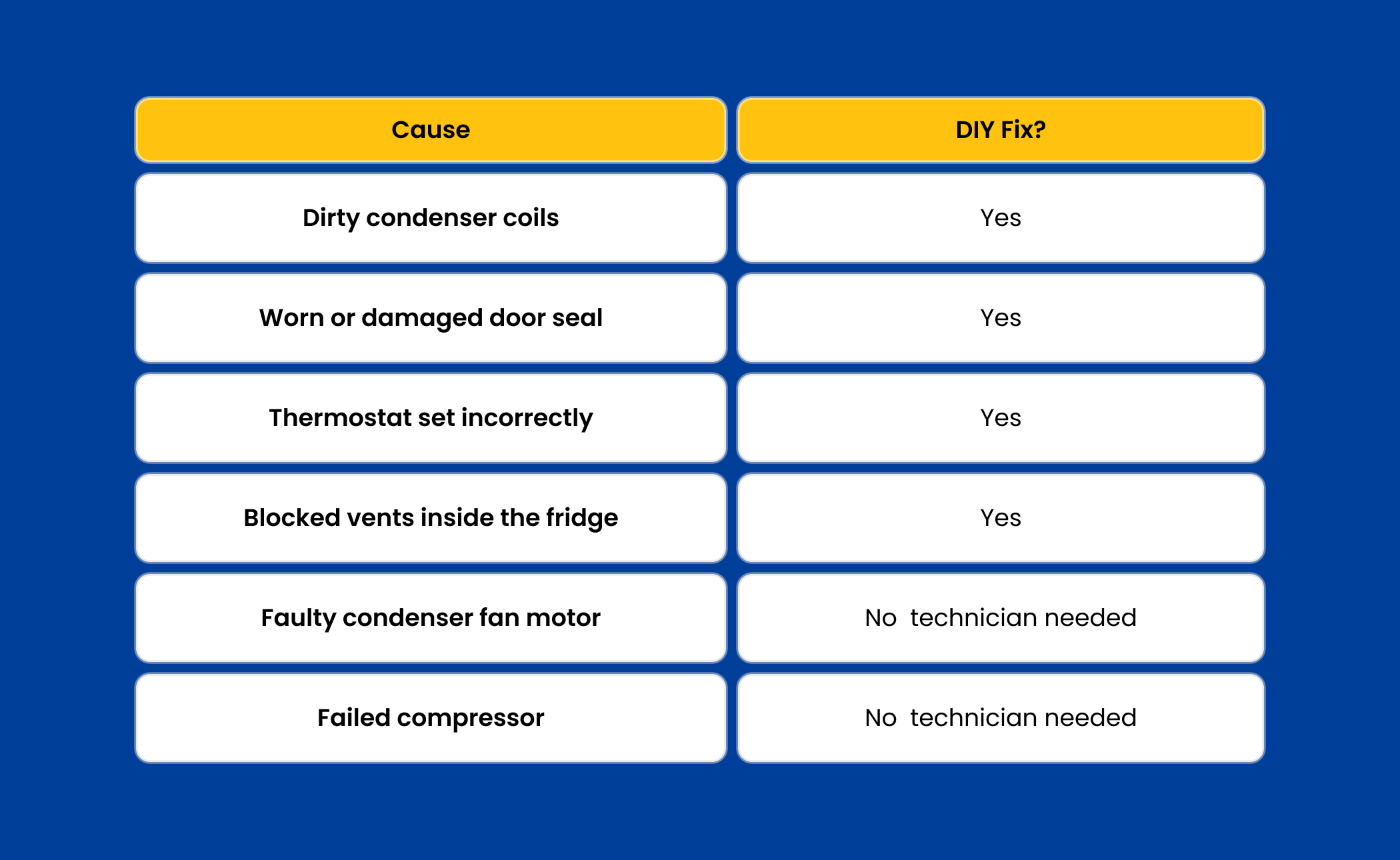
The most common reason a fridge is not cooling is dirty condenser coils. These coils release heat from inside the fridge when they're coated in dust, the fridge can't shed heat efficiently and struggles to maintain temperature.
How to fix it: Unplug the fridge and locate the coils at the back or underneath the unit. Use a coil brush or vacuum to remove dust buildup. This alone resolves many fridge not cooling complaints.
Tip: Clean condenser coils every six months to prevent this fridge problem from recurring.
2. Worn Door Seal
A damaged gasket lets warm air into the fridge constantly, making it impossible to maintain a cool temperature no matter how hard the compressor works.
How to fix it: Run the dollar bill test close the door on a bill and pull it out. If it slides freely, the seal has lost its grip and needs replacing. Wipe the gasket clean first; sometimes built-up residue mimics a damaged seal.
3. Incorrect Thermostat Setting
If the temperature dial was accidentally adjusted, your fridge not cooling may be as simple as a wrong setting.
How to fix it: Set the thermostat between 37°F and 40°F (3°C–4°C). Give the fridge two to three hours to reach the new temperature before assessing.
4. Blocked Interior Vents
Overpacking the fridge can block the vents that circulate cold air between compartments, causing uneven or insufficient cooling.
How to fix it: Remove items blocking the vents at the back wall of the fridge interior. Rearrange food to allow air to circulate freely.
5. Faulty Condenser Fan Motor
The condenser fan circulates air over the coils. If the fan has stopped working, heat can't be released and the fridge stops cooling effectively.
How to fix it: Listen for the fan running when the fridge is operating. If it's silent or making grinding noises, the motor has likely failed and should be replaced by a technician
6. Failed Compressor
The compressor is the heart of the cooling system. A failing compressor is one of the more serious fridge not cooling causes and is almost always accompanied by clicking or buzzing sounds at startup.
How to fix it: This repair requires a trained technician. If your fridge is over ten years old and the compressor has failed, weigh the repair cost against replacement before proceeding.
When to Call a Professional
Try the DIY fixes above first many fridge not cooling problems are resolved by cleaning coils or replacing a gasket. Call a technician if:
The fridge is still not cooling after cleaning coils and checking the seal
The compressor is making clicking or buzzing sounds
The condenser fan isn't running
Error codes appear on the display
For a full overview of all common fridge problems, read our Most Common Fridge Problems and How to Fix Them guide. You can also explore our fridge repair service page or check our home appliance maintenance tips to prevent fridge problems before they start.
Call FM Appliances for Same-Day Fridge Repair in NC & SC
If your fridge is not cooling and the DIY fixes haven't helped, don't wait warm temperatures accelerate food spoilage fast.
FM Appliances provides same-day fridge repair across North Carolina and South Carolina, backed by warranty protection on every job.
Call us today: (978) 923-9666
Frequently Asked Questions
Why is my fridge not cooling but the freezer works fine?
This is a common fridge problem caused by a blocked evaporator fan or a failed damper that controls airflow between the freezer and fridge compartments. Cold air is being produced but isn't reaching the fridge section.
How long does it take for a fridge to cool down after being fixed?
After resolving the underlying fridge problem, most units return to the correct temperature within two to four hours. If it takes longer than six hours, the issue may not be fully resolved.
Can a fridge not cooling be caused by the room temperature?
Yes. If the fridge is in a very hot environment such as a garage in summer, it may struggle to cool efficiently. Fridges are rated to operate within a specific ambient temperature range usually 60°F–110°F.
Is a fridge not cooling always an expensive repair?
Not necessarily. Many fridge not cooling problems dirty coils, a worn gasket, a wrong thermostat setting cost little or nothing to fix. Compressor replacement is the most expensive repair, but most other causes are straightforward and affordable.

