



Washing Machine Not Draining? Causes & Fixes
There's nothing more frustrating than opening your washing machine after a cycle and finding a tub full of standing water. If your washing machine is not draining, you're not alone this is one of the most common washer problems homeowners face. The good news is that many of the causes behind a washing machine not draining are straightforward to identify, and some you can even fix yourself.
In this guide, we'll cover the most likely reasons your washing machine is not draining and walk you through what to do next.
How Does a Washing Machine Drain?
Your washing machine drains by pumping water out through a drain hose into a standpipe or utility sink. A drain pump powers this process, and several components including filters, hoses, and lid switches all need to work together for the drain cycle to complete successfully. When any of these parts fail or get blocked, you end up with a washing machine not draining at the end of the cycle.
Common Reasons Your Washing Machine Is Not Draining
1. Clogged Drain Hose
The drain hose carries water from the machine to your home's drain system. Over time, lint, debris, and even small clothing items like socks can build up inside the hose and cause a blockage one of the top reasons a washing machine won't drain.
What to do: Disconnect the drain hose from the back of the machine (have a bucket ready) and check for any blockages. Flush the hose with water to clear it out before reconnecting.
2. Blocked Pump Filter
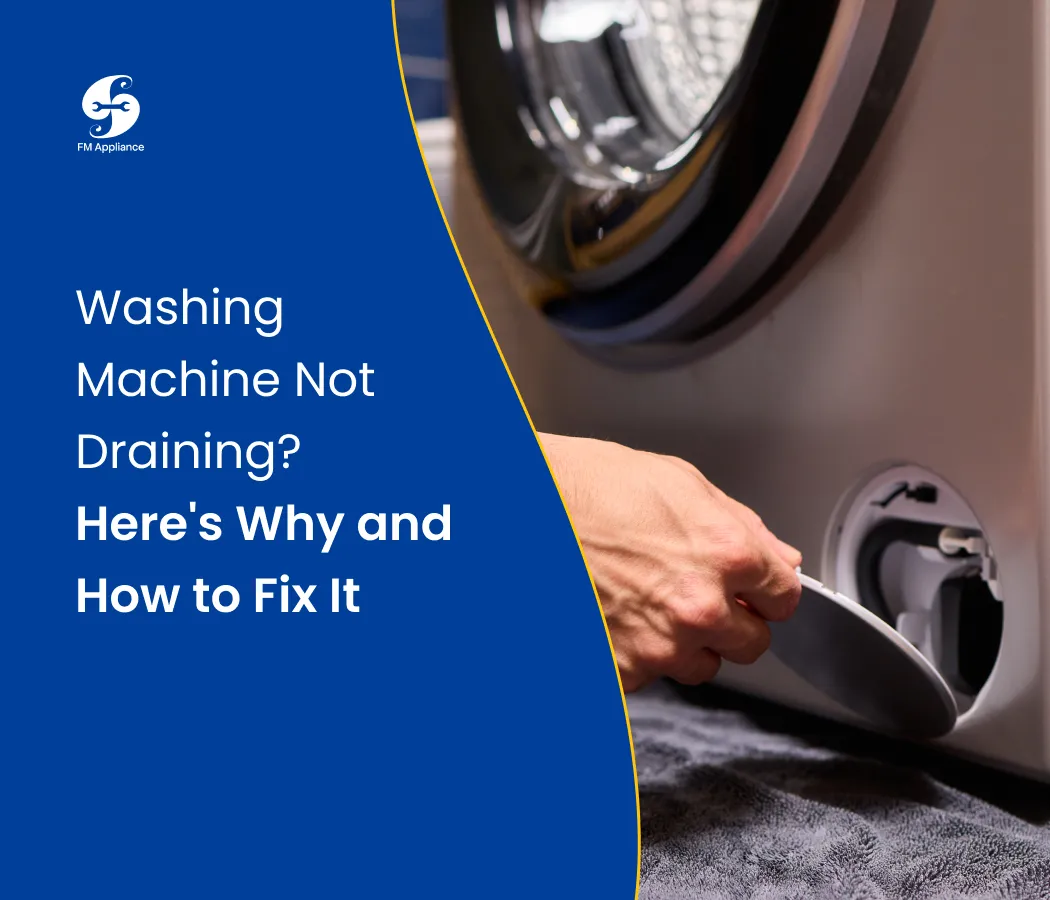
Most front-load and many top-load washers have a pump filter (also called a coin trap) that catches debris before it reaches the drain pump. When this filter gets clogged with lint, hair, or small objects, it restricts water flow and leaves your washing machine not draining properly.
What to do: Locate the filter usually behind a small panel at the front bottom of the machine. Place a shallow pan underneath, unscrew the filter cap slowly, and clean out any debris. This should be done every few months as regular maintenance.
3. Faulty Drain Pump
The drain pump is the component that actually moves water out of the machine. If the pump motor burns out or becomes jammed with debris, your washing machine will stop draining entirely.
What to do: Listen for a humming or buzzing noise during the drain cycle this can indicate a jammed pump. If the pump motor has failed, it will need to be replaced by a professional. Our washer and dryer repair at FM Appliances can diagnose and replace a faulty drain pump the same day.
4. Kinked or Improperly Installed Drain Hose
Sometimes the issue isn't a blockage it's the position of the drain hose. If the hose is kinked, bent sharply, or inserted too far into the standpipe, it can create a siphoning effect or simply restrict flow, resulting in a washing machine not draining fully.
What to do: Check that the drain hose isn't kinked behind the machine. The end of the hose should sit no more than 4-6 inches into the standpipe and should be secured at the correct height (typically 30-90 cm from the floor) as specified in your washer's manual.
5. Lid Switch or Door Latch Malfunction
On top-load washers, the lid switch signals the machine that the lid is closed and it's safe to proceed with the spin and drain cycle. If this switch is broken, the washer may stop mid-cycle and fail to drain. Similarly, on front-loaders, a faulty door latch can prevent the drain cycle from starting.
What to do: Test the lid switch by pressing it manually while the machine is running. If the washer doesn't respond, the switch likely needs to be replaced. This is a common and relatively straightforward repair for a trained technician.
6. Drive Belt Issues
Some washing machines use a drive belt to power both the drum and the drain pump. If this belt is worn, loose, or broken, the pump won't operate correctly leaving you with a washing machine not draining and clothes soaked in water.
What to do: If you notice a burning rubber smell or the drum isn't spinning during the wash cycle, a worn drive belt could be the culprit. Replacing a drive belt requires disassembling part of the machine and is best left to a professional.
7. Control Board or Timer Failure
Modern washing machines rely on electronic control boards to manage each stage of the wash cycle, including draining. If the control board or mechanical timer fails, the machine may not receive the signal to begin draining at all.
What to do: If you've ruled out all the above causes and your washing machine is still not draining, a control board issue may be to blame. This type of repair requires professional diagnosis. Contact FM Appliances and our technicians will identify the problem and get your machine back up and running.
8. Unbalanced or Overloaded Drum
Overloading your washing machine or washing very heavy items like rugs and blankets can cause the machine to become unbalanced during the spin cycle. Many modern washers will automatically stop or skip the drain cycle if they detect an imbalance, as a safety measure.
What to do: Try redistributing the load or removing some items and running the drain/spin cycle again. Avoid overloading check your washer's recommended load capacity in the user manual.
When to Call a Professional
Some draining issues like cleaning a clogged filter or straightening a kinked hose are easy DIY fixes. But if the problem involves the drain pump, drive belt, lid switch, or control board, it's time to call in an expert.
FM Appliances offers same-day washer repair across North Carolina and South Carolina. Our experienced technicians handle all major brands and models, getting your laundry routine back on track as quickly as possible. Beyond washers, we also repair refrigerators, dishwashers, ovens, fridges, and microwaves all with the same fast, reliable service.
FAQ: Washing Machine Not Draining
Why is my washing machine not draining or spinning?
The most common causes are a clogged drain hose, blocked pump filter, faulty drain pump, or a malfunctioning lid switch. An overloaded drum can also prevent the spin and drain cycle from completing.
Can I fix a washing machine that won't drain myself?
Simple issues like cleaning the pump filter or clearing a kinked hose are safe DIY fixes. For pump, belt, or control board problems, it's best to call a professional to avoid causing further damage.
How do I get water out of my washing machine that won't drain?
Most washers have a manual drain option through the pump filter at the front of the machine. Place a shallow pan underneath, slowly open the filter cap, and let the water drain out gradually.
Why does my washing machine stop mid-cycle and not drain?
This is often caused by an unbalanced load, a faulty lid switch or door latch, or an electronic control board issue. Try rebalancing the load first if the problem continues, a technician should inspect the machine.
How long does a washing machine drain repair take?
Many repairs can be completed within a single visit. FM Appliances offers same-day service across NC and SC, so you won't be waiting long to get your washer back in working order.

