



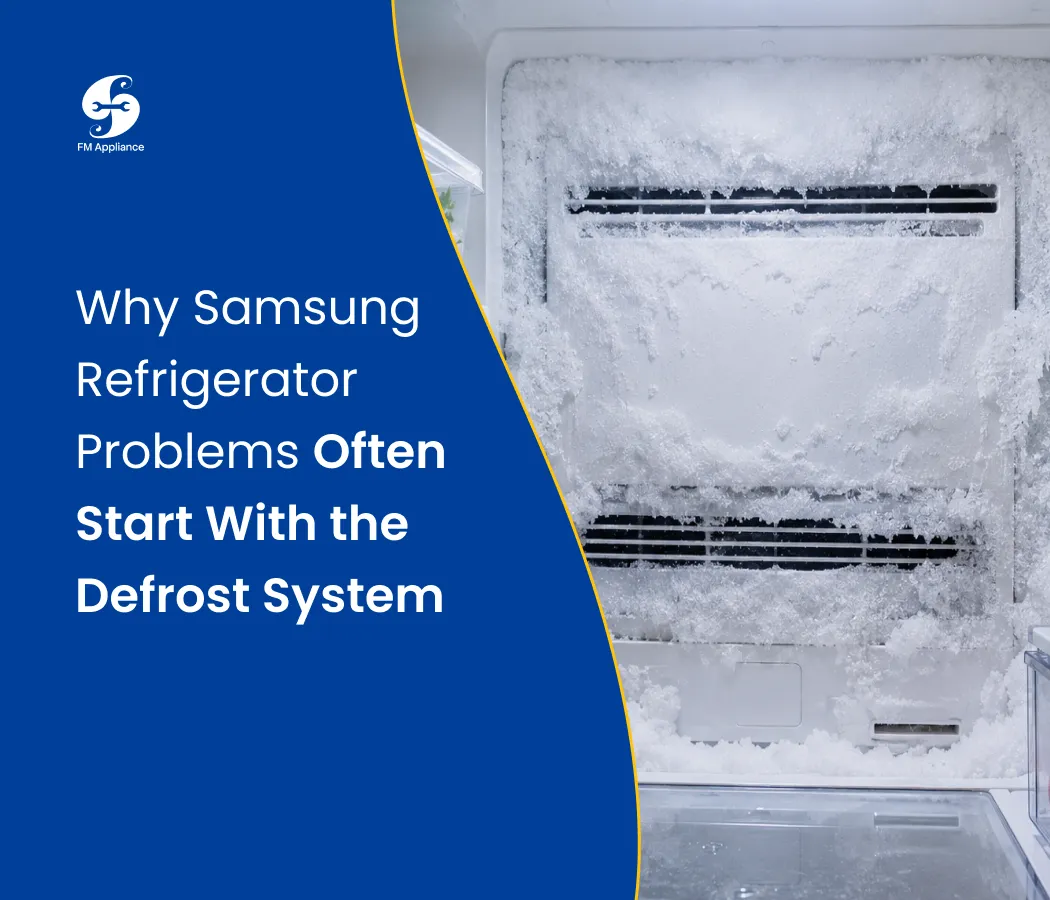
Samsung Refrigerator Problems: Why Your Fridge Keeps Freezing Up
Modern Samsung refrigerators use a frost-free design, which means the appliance automatically cycles through a defrost process to prevent ice from building up on the evaporator coils. This is a great feature when it works. But when any part of this system fails, you end up with serious samsung refrigerator problems, including excessive ice buildup, poor cooling, and eventually a completely frozen interior.
The defrost system in your Samsung fridge consists of three main components that work together:
• The defrost heater — melts frost off the evaporator coils
• The defrost thermostat — monitors temperature and signals the heater
• The defrost timer or control board — schedules regular defrost cycles
If even one of these components fails, frost accumulates faster than it can be removed and that's when samsung ice buildup becomes a real problem.
Samsung Fridge Freezing Up? The Real Cause Is Your Defrost System
You open your Samsung refrigerator expecting fresh food and instead you find a wall of ice. Sound familiar? You're not alone. Samsung refrigerator problems related to freezing and ice buildup are among the most common complaints homeowners face today. And while it's tempting to blame the temperature settings or the weather, the real culprit is almost always hiding inside your appliance: a failing defrost system.
In this guide, we're going to break down exactly why your Samsung fridge keeps freezing up, what's going wrong with the defrost system, and what you can do about it before the problem gets worse and more expensive.
Common Signs Your Samsung Refrigerator Has a Defrost Problem
Not sure if your defrost system is to blame for your samsung refrigerator problems? Watch for these red flags:
• Thick ice forming on the back wall of the freezer or fridge compartment
• Food in the refrigerator section is freezing even on normal settings
• The fridge is running constantly but not cooling properly
• You hear unusual sounds like clicking or buzzing from inside the unit
• Puddles of water forming under or around the refrigerator
• Ice maker stopped working or is producing very little ice
These symptoms are classic indicators of samsung refrigerator ice buildup caused by a defrost failure. The longer you wait, the worse the damage can get — and the more expensive the repair.
The Three Main Defrost Components That Fail in Samsung Fridges
1. Defrost Heater Failure
The defrost heater is a coiled element that wraps around the evaporator coils. It turns on periodically to melt any frost that has formed. When it burns out or short-circuits, frost builds up unchecked — one of the most common samsung refrigerator problems reported by homeowners.
You can test the heater with a multimeter. A reading of no continuity means the heater is dead and needs replacement.
2. Defrost Thermostat Malfunction
The defrost thermostat acts as a safety switch. It tells the heater when it's safe to turn on and off based on coil temperature. If it fails in the open position, the heater never receives the signal to activate — and samsung refrigerator ice buildup begins almost immediately.
3. Faulty Defrost Control Board or Timer
Older Samsung models use a mechanical defrost timer, while newer ones rely on the main control board to schedule defrost cycles. If either of these fails, the defrost cycle may never run — or it may run too often, causing other samsung refrigerator problems like over-cooling and freezing.
What Causes the Defrost System to Fail in the First Place?
Understanding why samsung refrigerator problems happen can help you prevent them in the future. Here are the most common root causes:
• Age and wear — components naturally degrade over time, especially heating elements
• Power surges — sudden voltage spikes can damage the control board or thermostat
• Improper installation — a poorly leveled fridge can cause drainage issues that worsen ice buildup
• Frequent door opening — excess warm, humid air enters and creates more frost than the system can handle
• Damaged door gaskets — a poor seal lets warm air in continuously, accelerating frost formation
Can You Fix Samsung Refrigerator Problems at Home?
If you're handy and the repair is straightforward — like replacing a defrost heater or thermostat — a DIY fix may work. However, most samsung refrigerator problems involving the defrost system require disassembling the interior panels, working around the refrigerant lines, and testing electrical components. One wrong move and you could make things significantly worse.
Here's a simple approach you can try first:
• Unplug the refrigerator and let it defrost completely for 24–48 hours with the doors open
• Clean the drain hole at the bottom of the freezer compartment it may be clogged
• Check the door gaskets for cracks or gaps and replace them if needed
• Plug back in and monitor if the ice buildup returns within a week or two, the defrost system is failing
If the problem keeps coming back, it's time to call in a professional. Attempting to replace control boards or refrigerant-side components without training can void your warranty and cause further damage.
When to Call a Professional Appliance Repair Technician
Persistent samsung refrigerator problems are a sign that the appliance needs professional attention. If you've already manually defrosted the fridge and the samsung refrigerator ice buildup returns, the defrost system has almost certainly failed — and that requires a proper diagnosis.
At FM Appliances, our certified technicians specialize in diagnosing and repairing all types of samsung refrigerator problems. We use genuine parts, provide upfront pricing, and back our work with a satisfaction guarantee.
Here are the clear signs it's time to stop DIYing and call a pro:
• Ice buildup returns within 1–2 weeks of manual defrosting
• The fridge is not cooling even after defrosting
• You notice a burning smell or hear strange electrical sounds
• Error codes are appearing on your Samsung display panel
• Food is spoiling faster than normal despite normal settings
Preventing Samsung Refrigerator Ice Buildup in the Future
Once your samsung refrigerator problems are resolved, a little maintenance goes a long way toward preventing them from coming back:
• Keep the refrigerator at the manufacturer-recommended temperature (37°F for the fridge, 0°F for the freezer)
• Inspect and clean door gaskets every 6 months
• Don't block air vents inside the fridge with food items
• Avoid putting hot food directly into the refrigerator let it cool first
• Schedule annual appliance inspections with a qualified technician
If you're unsure about the health of your unit, browse our appliance repair blog for more tips and guides on keeping your home appliances running at peak performance.
Don't Let Samsung Refrigerator Problems Ruin Your Food or Your Day
Samsung makes excellent refrigerators but like any complex appliance, they're not immune to mechanical failure. When the defrost system breaks down, samsung refrigerator ice buildup can go from a minor inconvenience to a full-blown appliance emergency in a matter of days.
The good news? These samsung refrigerator problems are almost always fixable — especially when you catch them early. Don't wait until your entire freezer is encased in ice or your fridge stops cooling altogether.
Contact the appliance repair experts at FM Appliances today. We'll diagnose your Samsung refrigerator fast, explain exactly what's wrong, and get your appliance back to working order guaranteed.

